Saturn's Rings Vanish TONIGHT?! Don't Miss It!
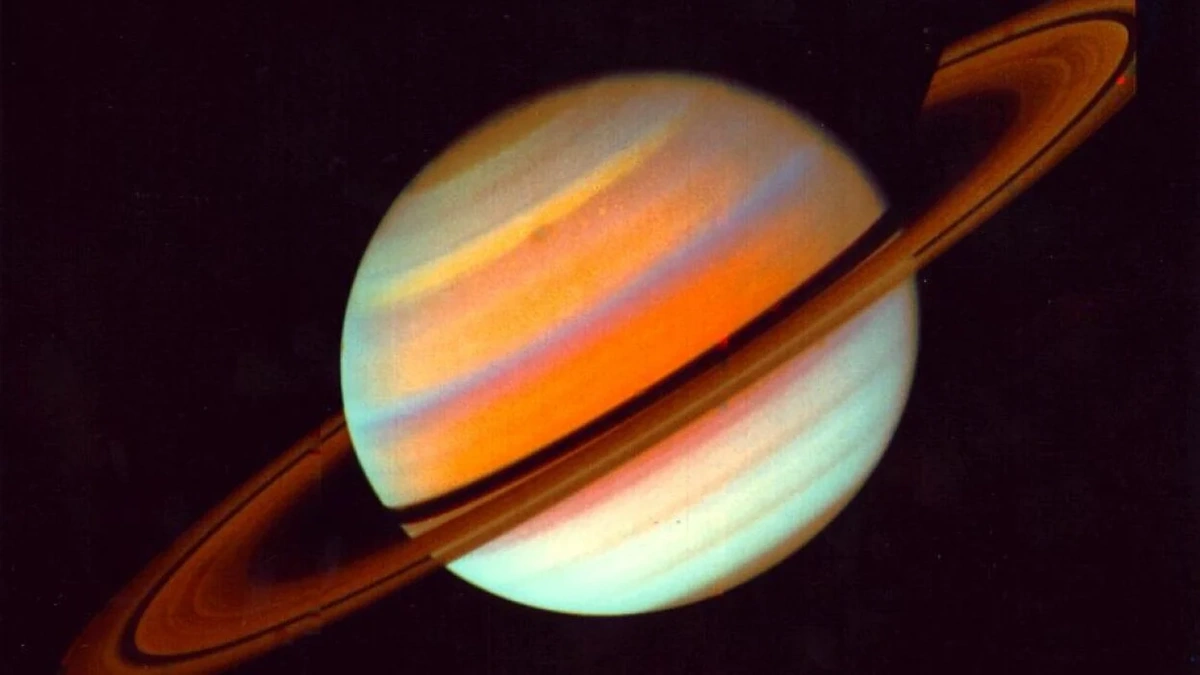
Okay, space enthusiasts, listen up! Tonight, something pretty wild is happening that you won’t want to miss. Saturn’s rings , those iconic bands of ice and rock, are going to appear to vanish. Yes, you read that right vanish! But before you start mourning the loss of one of the solar system’s most beautiful sights, let me assure you, it’s all an optical illusion.
The thing is, this isn’t about Saturn’s rings actually disappearing (they’re not going anywhere anytime soon). It’s about our perspective from Earth. So, what’s the deal? Let’s dive into the “why” behind this cosmic trickery, because that’s where the real fascination lies. And how you can observe this celestial event from India.
Why This Matters | More Than Just a Disappearing Act
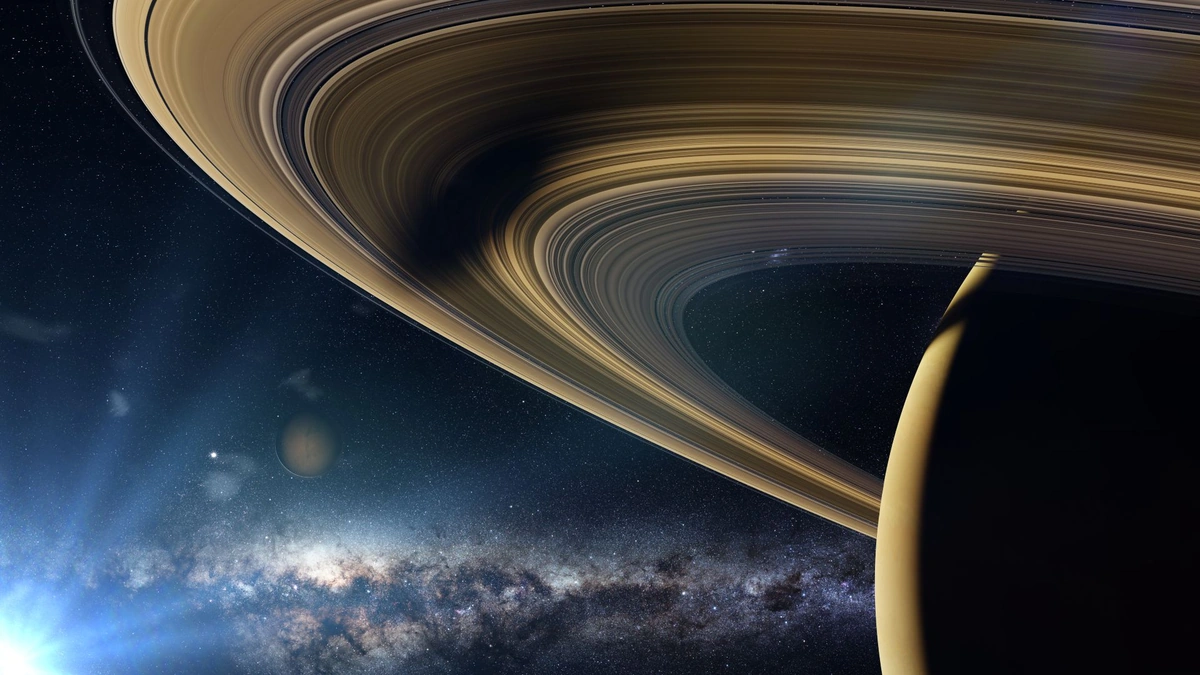
Here’s the thing: these moments are more than just cool photo ops. They offer scientists a unique opportunity to study Saturn and its ring system. When the rings are edge-on, it’s like the glare is turned off, allowing us to see fainter objects nearby – tiny moons, new rings, and other subtle details that are normally hidden. It’s like cleaning a dusty window to see the world outside more clearly. This allows us to learn more about ring composition and dynamics.
Think of it like this: imagine trying to spot a firefly next to a floodlight. Nearly impossible, right? But when the floodlight dims, the firefly’s light becomes visible. That’s essentially what’s happening with Saturn’s rings. The ‘floodlight’ of the bright rings dims, revealing the fainter ‘fireflies’ around Saturn. What fascinates me is that this ‘disappearance’ helps us peer deeper into the mysteries of this gas giant and its surroundings.
And, it also matters because it connects us to the cosmos. In our busy lives, we rarely take a moment to look up and appreciate the vastness of space. Events like this remind us that we are part of something much larger than ourselves, a small planet orbiting a small star, that is part of a galaxy filled with countless stars like our sun, and countless planets like earth, and even planets like Saturn. It’s a humbling thought, isn’t it?
How the Optical Illusion Works
So, how does this disappearing act work? It’s all about angles . Saturn’s rings are tilted at about 27 degrees relative to Saturn’s orbit around the Sun. As Saturn makes its 29-year journey around the Sun, we on Earth sometimes see the rings nearly edge-on. This happens roughly every 13.75 to 15.75 years.
When the rings are edge-on, they appear incredibly thin from our perspective. Because the rings are actually quite thin (only about 10 meters in some places!), when we view them edge-on, they reflect very little sunlight back to us, making them seem to vanish. It’s like holding a piece of paper edge-on to your eye it practically disappears! Think of it as geometry playing tricks on our eyes. But this also helps scientists learn about the edge-on viewing geometry .
Let me rephrase that for clarity: Imagine you’re looking at a coin. If you look at it face-on, you see the whole circle. But if you turn the coin so you’re looking at it edge-on, it becomes a thin line and almost disappears. Same principle with Saturn’s rings, just on a vastly larger scale. But, and this is important, this ‘disappearance’ isn’t instantaneous. It’s a gradual fading that occurs over a period of days or even weeks.
Observing Saturn’s Ring “Disappearance” from India
Alright, let’s get practical. How can you, sitting right here in India, witness this celestial event? Unfortunately, spotting this event with the naked eye is going to be tough, even with the best visibility. The rings are already faint when edge-on, and city lights won’t help. You’ll need at least a good pair of binoculars or, ideally, a small telescope.
Here’s the thing I’ve learned from experience: location matters. Find a spot away from city lights. The darker your surroundings, the better your chances. Think about heading to the outskirts of your city, a nearby village, or even a rooftop with minimal light pollution. Light pollution makes even the brightest objects hard to observe.
And what about timing? What fascinates me is, the best time to view Saturn is when it’s highest in the sky. Check an astronomy app like SkyView Lite, Stellarium, or Star Walk 2 to find out when Saturn will be visible in your area. These apps are fantastic because they use your phone’s GPS to show you exactly where to look in the sky. Also, use a telescope for Saturn .
Remember, patience is key. It might take some time to get Saturn in focus and to adjust your eyes to the darkness. But trust me, the effort is worth it! And, share your images with friends. You can also check out our other space related articles.
Future Ring Disappearances and Scientific Opportunities
This isn’t a one-time event. Saturn’s rings will appear edge-on again in the coming years, offering more opportunities for both amateur astronomers and professional scientists. The next favorable ring-plane crossing is expected to occur in 2038. But honestly, I think it is better to observe them while you can.
These events are crucial for scientists because they allow for precise measurements of the rings’ thickness and composition. By studying how the rings reflect light when they are edge-on, scientists can learn more about the size and distribution of the particles that make up the rings. Additionally, these events provide a chance to search for small moons orbiting close to Saturn, moons that are normally hidden by the glare of the rings.
What fascinates me is how seemingly simple observations can unlock so much knowledge about our solar system. These ring-plane crossings help confirm observational confirmation and predictions.
The Broader Implications | A Universe of Wonders
Beyond the science, these events are a reminder of the dynamic and ever-changing nature of the universe. It’s easy to forget, in our daily routines, that we live on a planet hurtling through space, surrounded by countless other worlds, moons, asteroids, and comets.
The apparent vanishing of Saturn’s rings is a beautiful reminder that the universe is full of surprises, optical illusions, and hidden wonders waiting to be discovered. So, step outside tonight, look up, and marvel at the cosmos! You might just catch a glimpse of something truly extraordinary. It’s about the sheer joy of looking up and connecting with something bigger than ourselves. Space exploration brings out such joy.
FAQ
Why do Saturn’s rings sometimes appear to disappear?
It’s an optical illusion! As Saturn orbits the Sun, Earth’s viewing angle changes. When we see the rings edge-on, they appear very thin and seem to vanish.
Can I see Saturn’s ring disappearance with my naked eye?
It’s very difficult to see the disappearance with the naked eye. Binoculars or a small telescope are recommended.
When will Saturn’s rings appear edge-on again?
The next favorable ring-plane crossing is expected around 2038.
What do scientists learn from these events?
Edge-on views allow scientists to study the rings’ thickness, composition, and search for new moons near Saturn.
About the Author